These two projects, where I represented the School of Architecture, a partner in the proposal, were financed by BipZip, an initiative of the Lisbon Municipality.
In both projects I acted as part of the team to define general logistics and participate in decisions and mediation. I was also in charge of developing artistic activities with participants, facilitating art workshops, curating resulting artwork and organise and set up pop art exhibitions.
The first project, Mãos que falam, started in 2021. beginning with several different partners, due to difficulties that arise in these complex settings, aggravated by the pandemic, ended up missing one of the groups of prospective participants, youth with functional diversity hosted by the Fundação Liga,. We therefore worked just with a group from Bairro 2 de Maio, a diverse cohort constituted mostly by teens, young adults and a few seniors, alongside students from the master programmes in Design and Architecture studying at the faculty.
For these workshops working with the personal development team, we decided to co-join both of our workshops, which conferred more meaningful and interpretive facets to the work on both strands of the project. Artistic activities served to break the ice and to deepen connections between participants, to materialise feelings and perceptions, namely those related to otherness and conflict resolution.
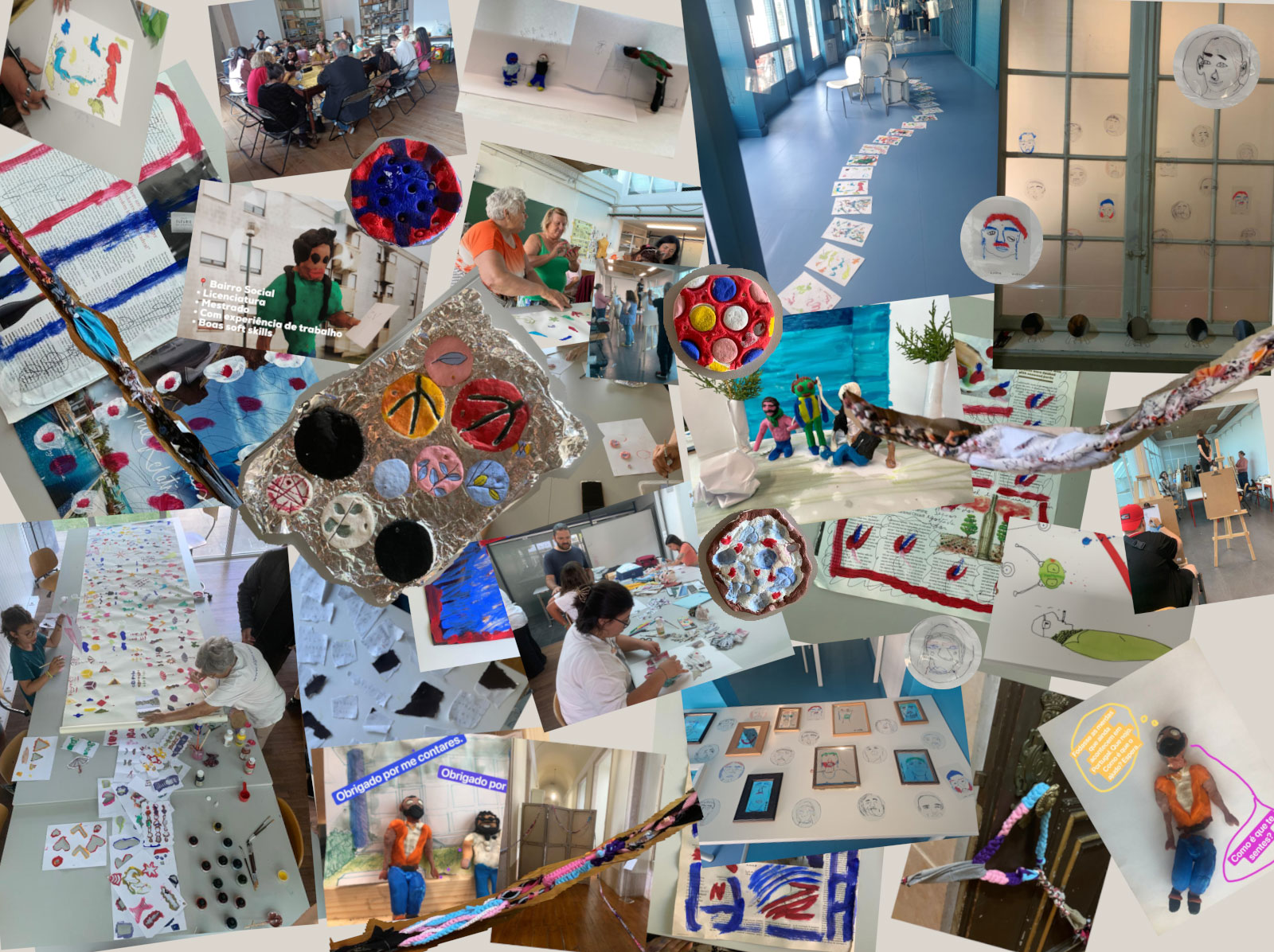
Since the participants with better attendance records were the faculty students and the teens and young adults, we were able to organise mixed groups to develop some of the work, the results of which are partially seen below, both in exhibition and workshop settings.
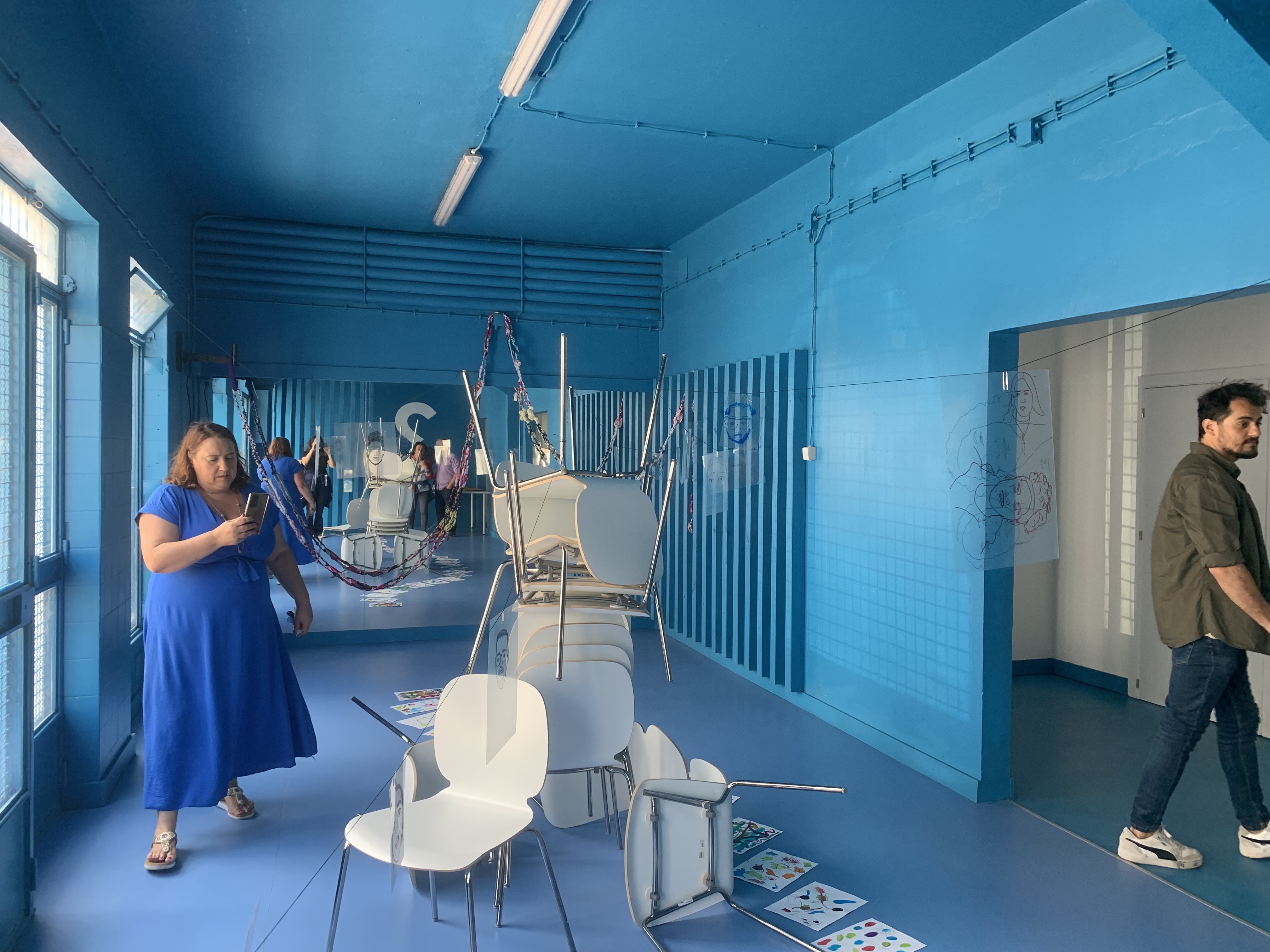
Above left, a view of one of the pop-up exhibitions within the Mãos que Falam project. Above right, portraits on transparent sheets made by 'tracing' peers on the other side of the window.
The second project, Aceleradora Tech Ocidental, began in 2022 and was mainly developed during the first semester of 2023. This participatory project was aimed at skills’ development to underserved populations living at Bairro 2 de Maio, again working together with students, and this time, including external volunteer participants. The group of participants in the art workshop series consisted mostly of senior women, children and teens, a few young adults and a smaller and less constant group of people with functional diversity. We implemented a partnership with a separate project in participatory action theatre, being develop in the same period at the Palácio da Ajuda, which neighbours the Bairro 2 de Maio, and ended up both working together in a few art activities, namely composite self-portraits on mirrors, and producing objects for the play. This collaboration gave us the opportunity of setting up two pop-up exhibitions at the Palácio da Ajuda, visited by larger audiences on the days that the play took place.
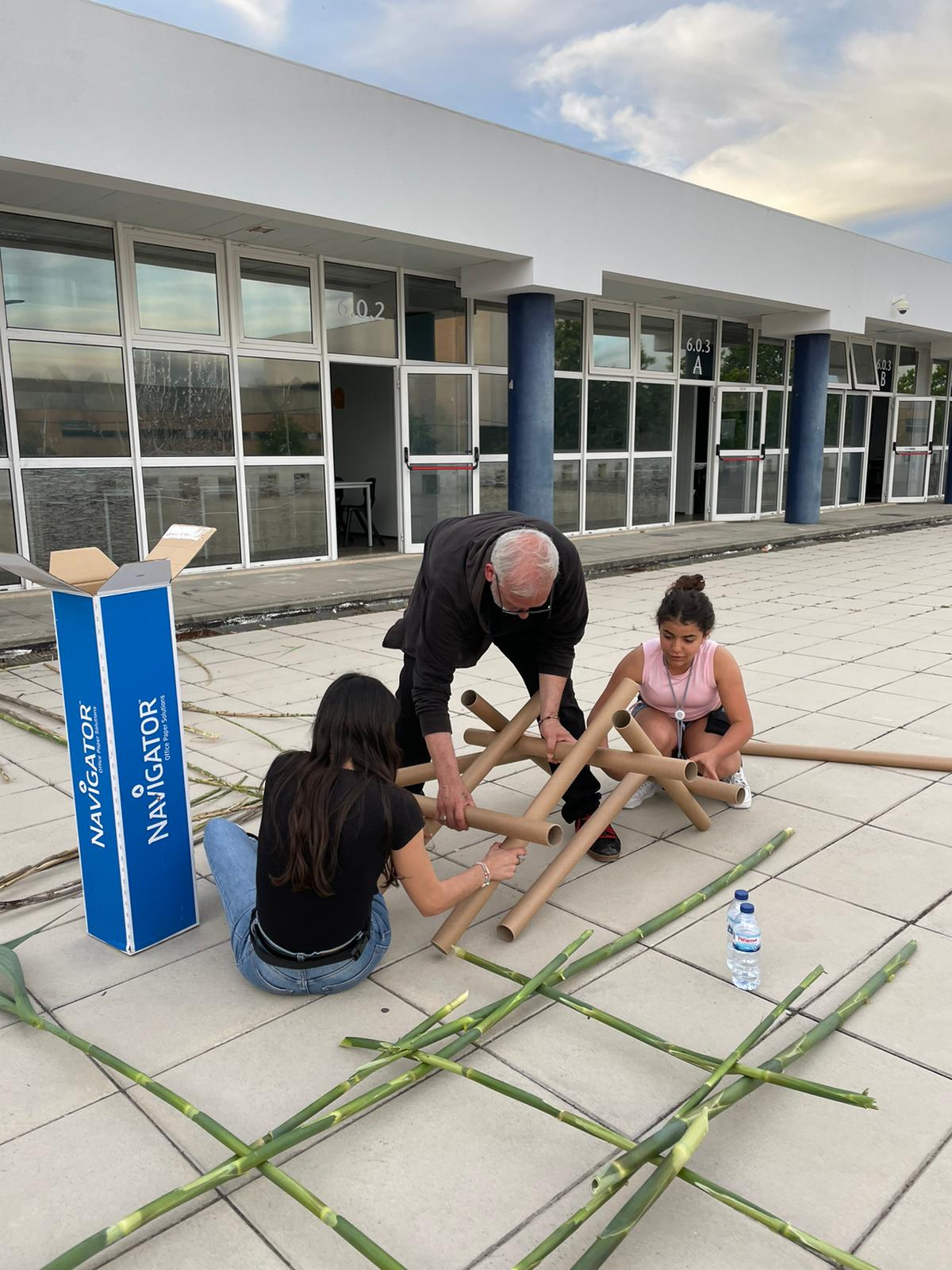
Below, we can see a collection of composite participatory self-portraits on mirrors, shown in the first exhibition, and some of the children and teen collecting bamboo canes in the area next to the faculty and building a grid with external participants.
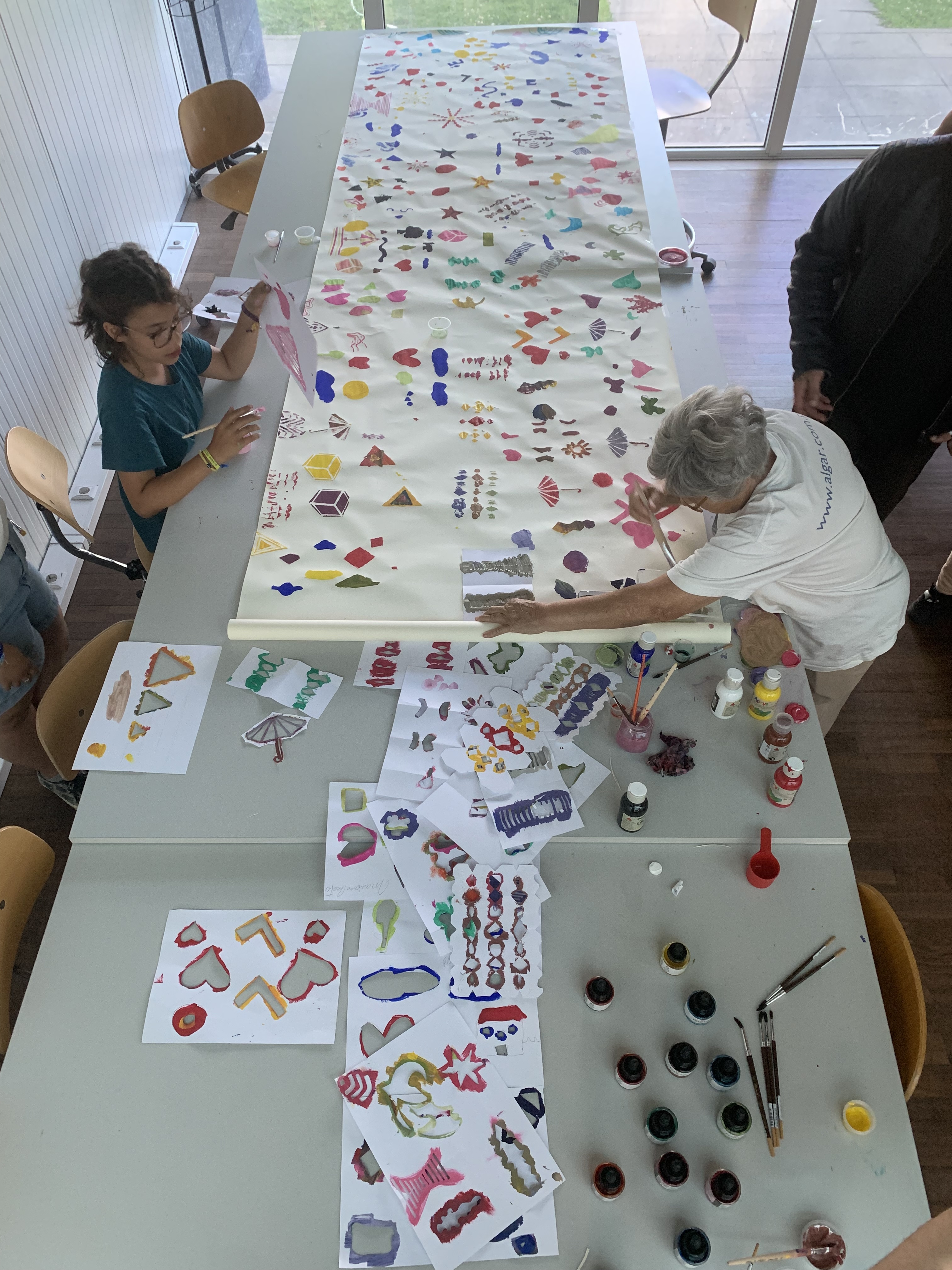
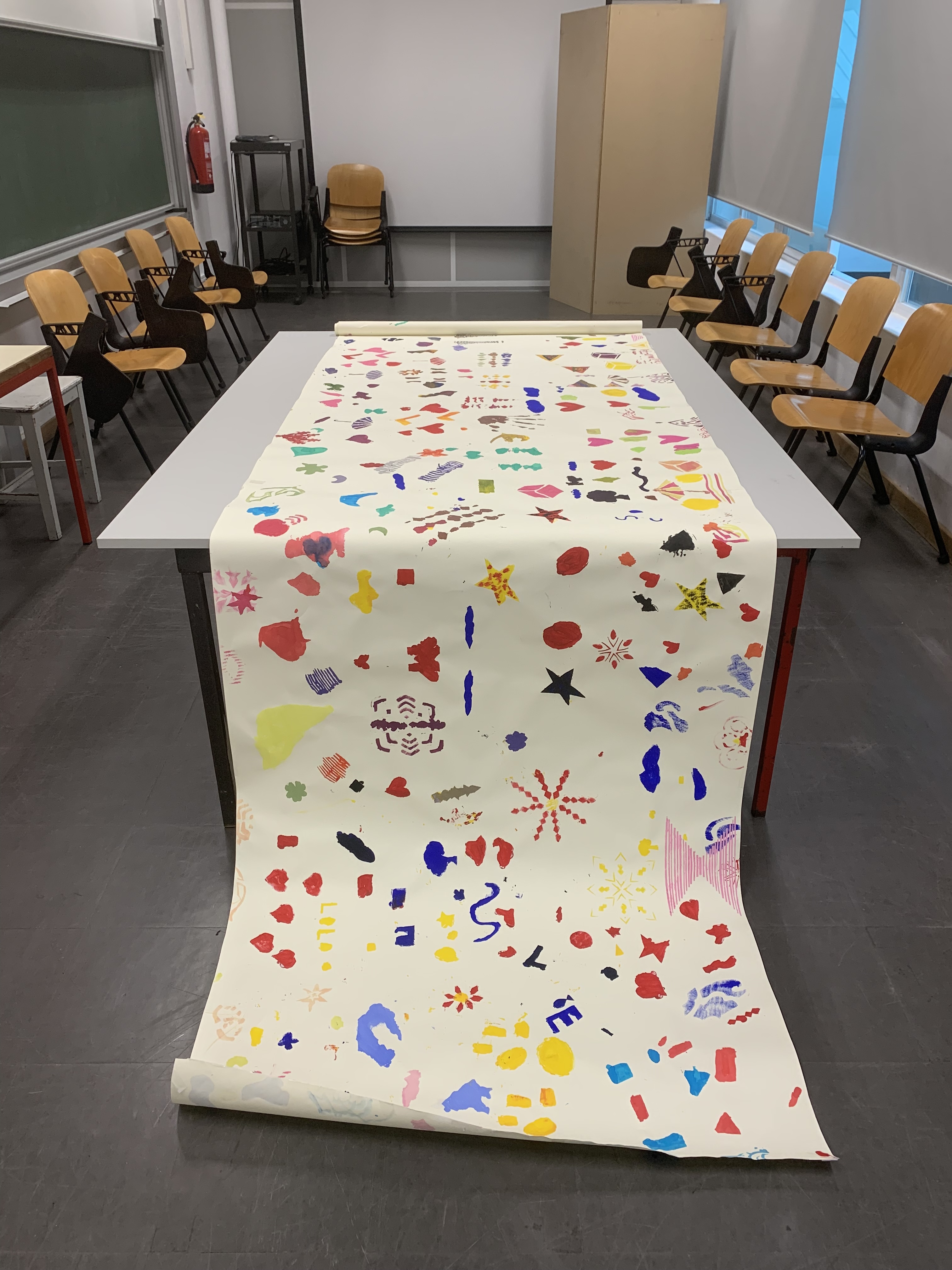
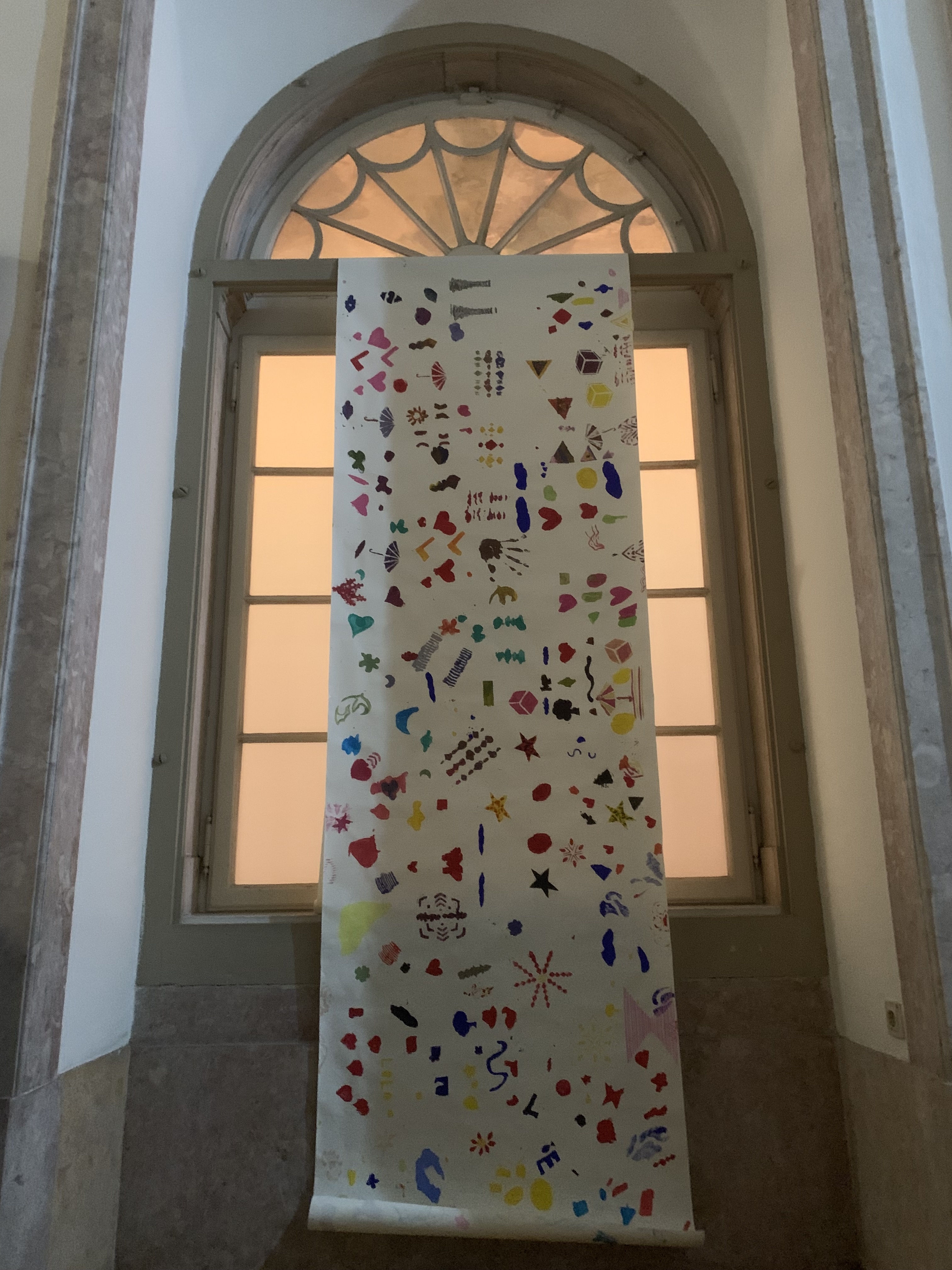
Above, a view of one of the activities that saw more involvement among participants a collective stencilled scroll, shown as exhibited at the Palácio da Ajuda, on the right.
At the premiere of the play, our participants felt very proud of their feat, and could be heard saying to others “I did this!”, to non-involved spectators of the play. As the project reached its ending, towards the following show (at Palácio da Ajuda, second show of the play) we asked our crew to let us know how they felt about their participation. One the most heartfelt feedback, by one of the senior women, resonated with us: “when I came to the workshops, it was as if I left my lige behind and entered a whole new, wonderful world.”